Polar Opposite race communications
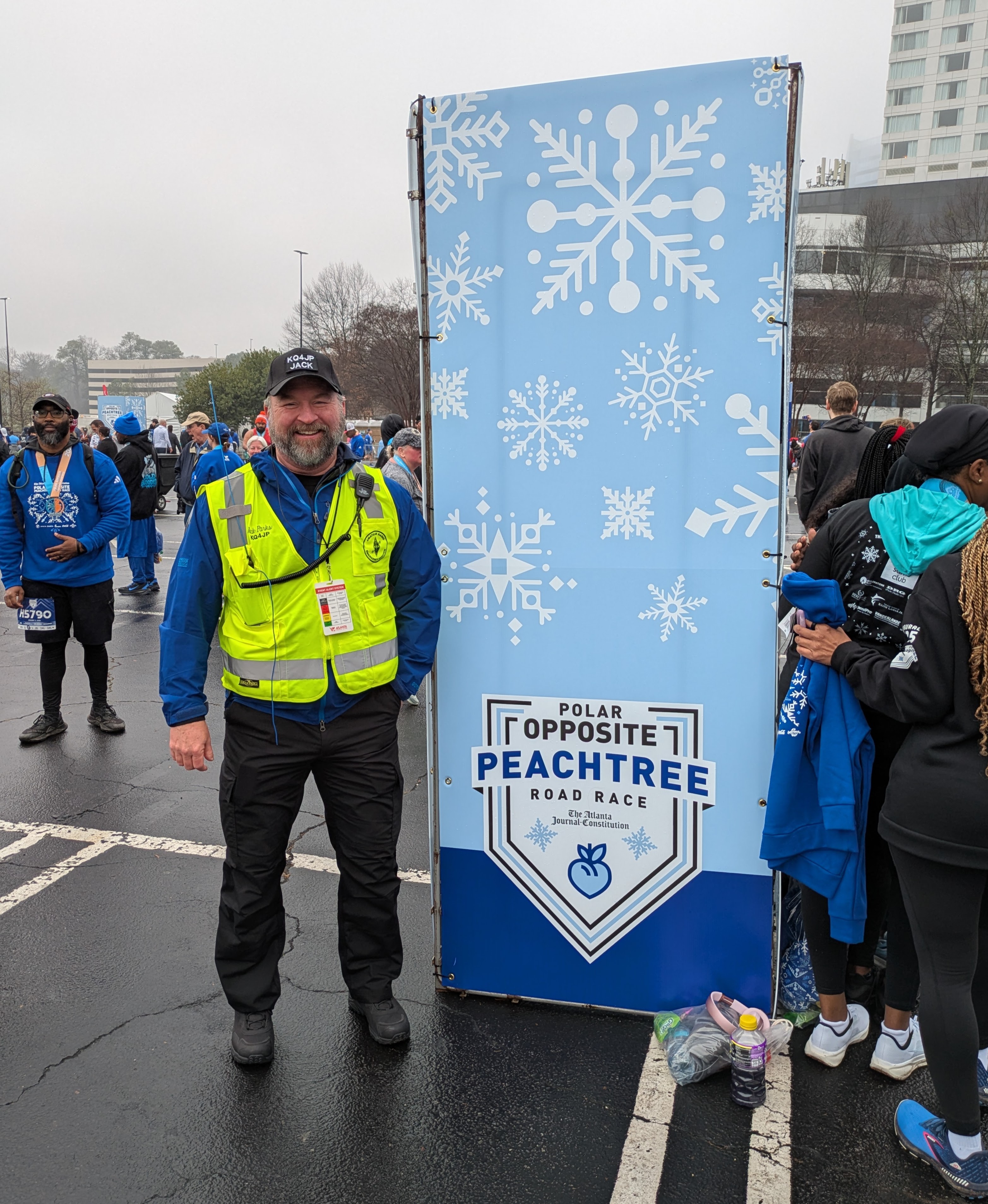
DeKalb ARES members volunteered with the Atlanta Track Club for the 2026 Polar Opposite Peachtree — the cold-weather, reverse-direction sibling of the Peachtree Road Race, run on Saturday, January 3 from Piedmont Park downhill into Lenox Square.
What the race is
The Polar Opposite Peachtree is a 10K run produced by the Atlanta Track Club that runs the iconic Peachtree Road Race course in winter and in reverse. 2026 was the second running of the event — same Saturday-morning footprint as the rest of ATC’s race calendar, but with a few twists that make it operationally distinct:
| Peachtree (July 4) | Polar Opposite (Jan 3) | |
|---|---|---|
| Direction | South to north | North to south, reversed |
| Start | Lenox Square | Piedmont Park (1000 Charles Allen Dr NE) |
| Finish | Piedmont Park | Lenox Square (3393 Peachtree Rd NE) |
| Cardiac Hill | Climb | Descent |
| Weather | Hot summer | Cold, often near or below freezing |
| Participation | 60,000+ | Capped, sold out — substantially smaller field |
| Course turn | Left on 10th | Right on Peachtree |
The 2026 race ran Saturday, January 3, 8:00 AM, finishing in Lenox Square. Registration sold out in early November 2025.
What DeKalb ARES contributed
DeKalb ARES members volunteered with the Track Club’s race-comms operation, supporting safety and dispatch on the same operational template the Track Club uses for the full Atlanta Marathon two months later — SAG/PACE vehicles, MOTO units, AID stations, and voice + APRS-based dispatch coordinated through Net Control.
This was a smaller, shorter race than the Marathon, so the DKARES footprint was correspondingly smaller. The same gear and procedures were exercised in cold-weather conditions, which is genuinely useful preparation for emergency-comms work that doesn’t get to schedule itself for July afternoons.
Why these races matter for ARES
Public-service support for ATC events is a low-stakes, repeatable way for an ARES group to:
- Practice net discipline under real-world tempo (dispatches, acknowledgments, status reports)
- Exercise cell-based APRS as a fleet-tracking tool for SAG and PACE vehicles, with all of its real-world quirks
- Build relationships with the Track Club’s race-management team and other regional ARES groups who staff the same events
- Stress-test cold-weather and hot-weather operating gear before it has to work in an actual activation
For more on the operational mechanics of the Track Club race-comms template — beacon rates, dispatch protocols, multiple comms paths, NC tooling — see the Atlanta Marathon entry, which captures the post-event AAR from that race in detail. The same playbook applied here.